

Coat & Rain Gear Refresh + Storage | Northridge Cleaners

Coats and rain gear in Northridge live a very real schedule: cool mornings, warm afternoons, car commutes, school runs, dinner nights, and then a sudden rainy stretch where everything gets worn back-to-back. The result is predictable. Outerwear that still looks fine starts to feel dusty, smell faintly stale, lose crisp shape, or stop performing the way it should. A shell starts soaking instead of beading. A wool coat looks flat. A puffer loses loft. Suede looks dull.
A seasonal refresh solves two problems at once. You get your coats looking sharp now, and you store them correctly so they come out next season ready to wear instead of musty, wrinkled, or damaged.
What a “refreshed” coat really means
A refreshed coat is not always a deep clean. It is the right mix of cleaning and finishing so your outerwear looks better and functions better.
- Surface cleanup and finishing remove dust, lift fibers, and restore structure.
- Targeted cleaning removes skin oils at collars and cuffs, plus light spills and city grime that slowly dull fabric.
- Performance restoration for rain gear clears residues and helps water repellency work the way it should.
- Correct storage prevents odor, crushing, and moisture problems that show up months later.
When these pieces are handled on schedule, your outerwear stays sharper, lasts longer, and saves you time because you are not fighting last-minute problems.
Quick message tips you can save
- Spot-check collars and cuffs weekly in winter.
- Refresh tailored wool and daily-wear coats at least once per season.
- Clean rain shells when they start smelling, looking grimy, or losing water beading.
- Never store anything even slightly damp.
- Store coats on wide hangers and use breathable covers, not tight plastic.
- After a heavy rain day, dry fully first, then decide if you need cleaning
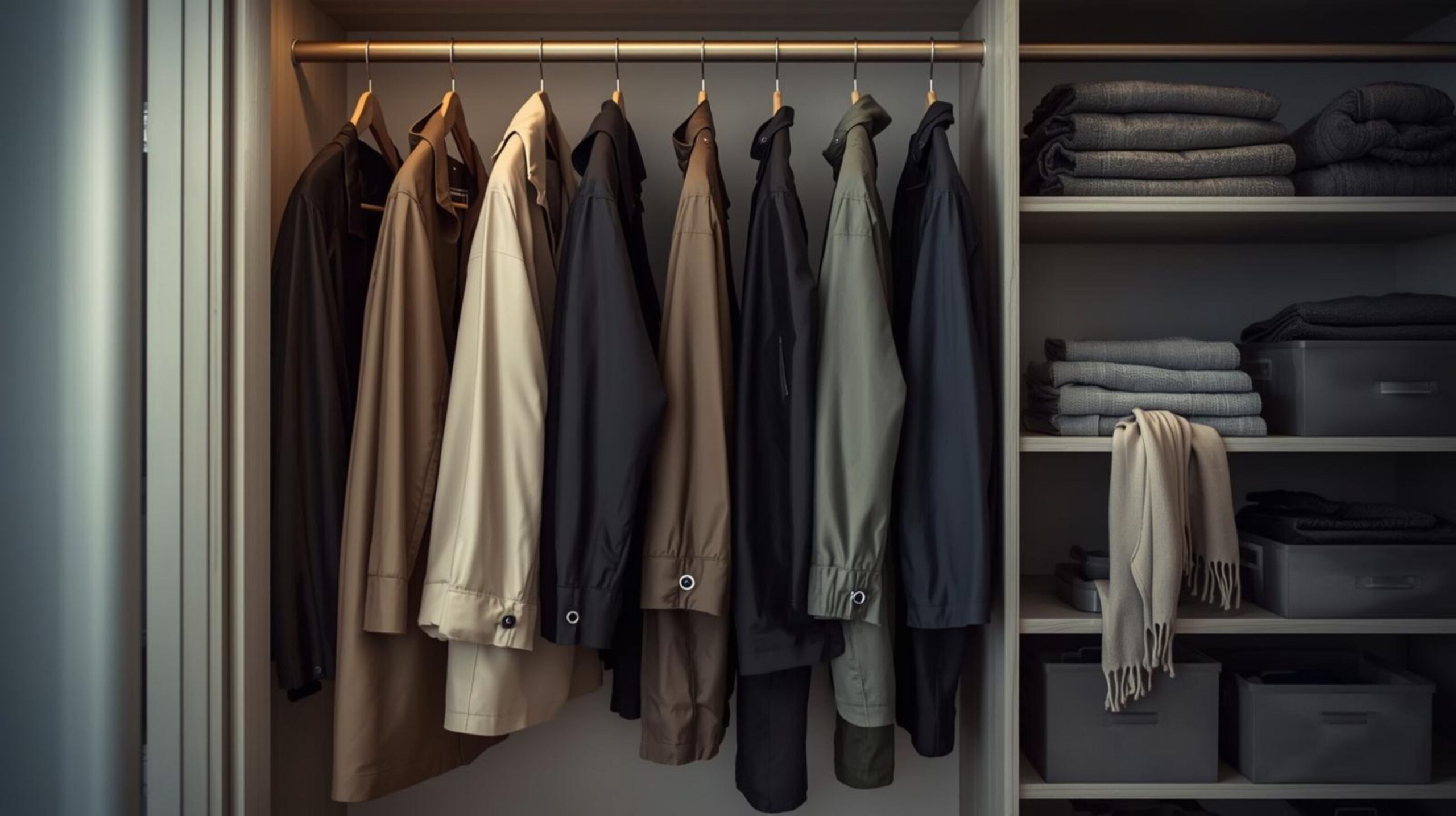
Coat & Rain Gear Refresh + Storage | Northridge Cleaners
The Coat & Rain Gear Care Calendar
This cadence works for most households. Increase frequency if your coat is daily wear, you have kids or pets, you commute heavily, or your outerwear sees food spills and outdoor exposure.
Weekly
- Quick lint and dust reset
- Collar and cuff check
- Hang to air out after wear
Monthly
- Rain shell performance check
- Inspect zippers, snaps, buttons, and seams
- Check pockets and hems for hidden stains
Every 2 to 3 months
- Refresh your most-worn outerwear
- Clean puffers or heavy jackets that have picked up odor or grime
- Treat leather and suede as soon as you notice dullness or water spotting
End of rainy season or late winter to early spring
- Full season reset for wool coats, puffers, and rain gear
- Store correctly for the warm season

Coat & Rain Gear Refresh + Storage | Northridge Cleaners
Why each layer of outerwear matters
Wool coats and tailored pieces
Wool and structured coats are about shape as much as cleanliness. The collar, lapels, cuffs, and pocket edges show wear first. If these areas dull out, the whole coat looks tired even if the rest is clean.
Practical tips
- Brush or lint-roll regularly so dust does not become “ground in.”
- Air out the coat after wear so odor does not accumulate in the lining.
- Refresh before storage so body oils and food vapors do not oxidize over time.
Puffers and down jackets
For puffers, the goal is odor control and loft preservation. Wrong washing and wrong drying can create clumping or flat areas that change how the jacket looks and feels.
Practical tips
- Do not overstuff a washer or dryer. Puffers need room to move.
- Drying matters as much as cleaning. Incomplete drying is a fast path to odor.
- If the jacket smells clean when warm but sour when cool, treat it as a moisture or residue issue.
Rain shells and technical jackets
Rain gear usually stops performing because residues build up and the water-repellent finish stops working. The jacket can still be “waterproof,” but the face fabric wets out and breathability drops, which makes it feel clammy and smell faster.
Practical tips
- If water no longer beads, start with a proper clean before you assume it needs reproofing.
- Avoid fabric softeners and heavy detergents on shells. Residue interferes with performance.
- Store shells fully dry and not tightly crushed for months.
Leather and suede
Leather and suede are not standard laundry items. If you see shine, salt lines, dark spots, stiffness, or uneven tone, stop experimenting. These materials need specialist cleaning and restoration to preserve color, texture, and structure.
Practical tips
- Do not use heat to “speed dry” leather or suede.
- Address water spotting early rather than letting it set and spread.
- Store away from direct sun and avoid sealing in plastic.
Accessories that people forget
Scarves, gloves, and beanies collect skin oils and makeup and can transfer residue back onto coats at collars.
Practical tips
- Rotate scarves so one item does not take all the wear.
- Clean accessories during the same cycle as your coat refresh.
- Store clean accessories dry so they do not carry odor into the next season.
Myth vs truth
Myth: If a coat looks clean, it is clean enough to store.
Truth: Invisible collar oils and light grime oxidize over time and can create odor, dullness, and even pest attraction. Clean before storage is the safest move.
Northridge tips that make this routine stick
- Plan around real schedules
Pick two anchor moments: after the rainy stretch ends and late winter. These are the best times to reset and store. - Commute and car reality
Seat contact, dust, and collar oils show up faster than obvious stains. A light seasonal refresh keeps coats looking new without over-cleaning. - Closet airflow matters
Many closets stay closed for weeks. Outerwear that is “almost dry” becomes stale fast. Air out coats before storing and avoid tight plastic that traps moisture.
Authority tip
If you want your outerwear to look noticeably better in one week, do this sequence: refresh your most-worn coat first, restore your rain shell performance second, and handle leather or suede third before spots set.
FAQ
How often should I clean a wool coat
If it is daily wear, a seasonal refresh is a reliable baseline, plus spot attention as needed. For occasional wear, clean when you notice odor, visible soil, or before storage.
How do I know if my rain jacket needs care
When it smells, looks grimy, or stops beading water, start with a proper clean. Many shells regain performance after cleaning and correct drying.
Can waterproof jackets be professionally cleaned
Yes, and care should follow the garment label and construction. Performance outerwear often benefits from residue-aware cleaning and correct finishing.
What should I do if my coat got caught in heavy rain
Dry it fully first. Do not store it damp. Once dry, check for water marks, odor, and grime and decide if it needs cleaning.
Should I store coats in plastic
Breathable storage is safer. Tight plastic can trap moisture and create odor.
How we help at Northridge Cleaners
Outerwear care is not just clean. It is choosing the correct method and finishing so the piece looks right and lasts.
Northridge Cleaners supports outerwear refresh and storage readiness with professional dry cleaning, professional wet cleaning when appropriate, specialist leather and suede cleaning and restoration, alterations and repairs, and convenient pickup and delivery scheduling for busy Northridge and San Fernando Valley routines.
Ready to get back on schedule
If your goal is outerwear that stays sharp and ready without last-minute stress, start with the calendar above and protect the routine by outsourcing the high-risk or bulky items. We can help you reset coats, restore rain gear performance, and store everything correctly so next season is easy.
Northridge Cleaners
9250 Reseda Blvd. #12, Northridge, CA 91324
(818) 886-1002
Links and resources
Northridge Cleaners links
Professional Dry Cleaning Services
Professional Wet Cleaning Services
Dry Cleaning vs Wet Cleaning guide
Leather & Suede Cleaning & Repair


